

My spouse told me that a Saudi prince, with a huge, expensively kitted out entourage, went to Balochistan, Pakistan not long ago and killed 2,100 endangered houbara bustards – 2,000 more than his permit allowed. The web was filled with shock and outrage, in part because many believed that this beautiful bird, on the verge of extinction, was killed because they are considered by some to be aphrodisiacs. “Is there any more ridiculous reason to kill an animal?” asked Naeem Sadiq, a Pakistani activist with a name uncannily similar to mine.

Posted widely on the web, a picture of bustard hunting – the modern way.
That’s a great question! The answer is easy when you consider stimulants, experiencing a romantic evening, blister beetles, and penile erection.
OK – let’s start with stimulants.
Stimulants are amazing! When an electrical impulse triggers a neuron to fire, it releases a chemical message to other cells. The chemical signal, however, has to leap across a gap to get to the other cells. This gap, or synapse, is the slimmest of spaces imaginable – it’s roughly 30 nanometers across or about one three thousandth the thickness of a sheet of paper. Yet it’s in this impossibly small space that stimulants, like coffee and crack cocaine, slip in and mess with nerve signals. This means that when the brain processes all the signals it gets from the surrounding world (sights, sounds, smells and so forth) and creates what we experience, stimulants can alter that experience even though the surrounding world hasn’t changed.
Consider the experience of a romantic evening. If the sights of an attractive partner, the warmth of a crackling fire, the sounds of Nat King Cole on a muted MP3 player, and a complex milieu of culturally and socially tuned behaviors all align themselves just right, one might experience a romantic evening … which can mean sex, which, if at least one guy is involved, often means an erect penis. I know that’s rather unromantic, but that aside, suffice it to say that romance and erect penises are not necessarily easy things to engineer. Stimulants, at least in theory, can change this. Add to the mix of evening activities imbibing alcohol, eating oysters, chocolates, ginseng, the testicle of a bull, snake meat, bark of the yohimbe tree, Brazilian potency wood, MACA root, the penis of a tiger or dog, eating penis- or vagina-shaped mushrooms sautéed in butter, ground horn of a rhino, the meat of a pangolin or gecko, and possibly hundreds of other stimulants, and the experience is altered even though the surrounding world was not – same partner, same crackling fire, same music, different experience.
Now, enter the blister beetle and the bustard.
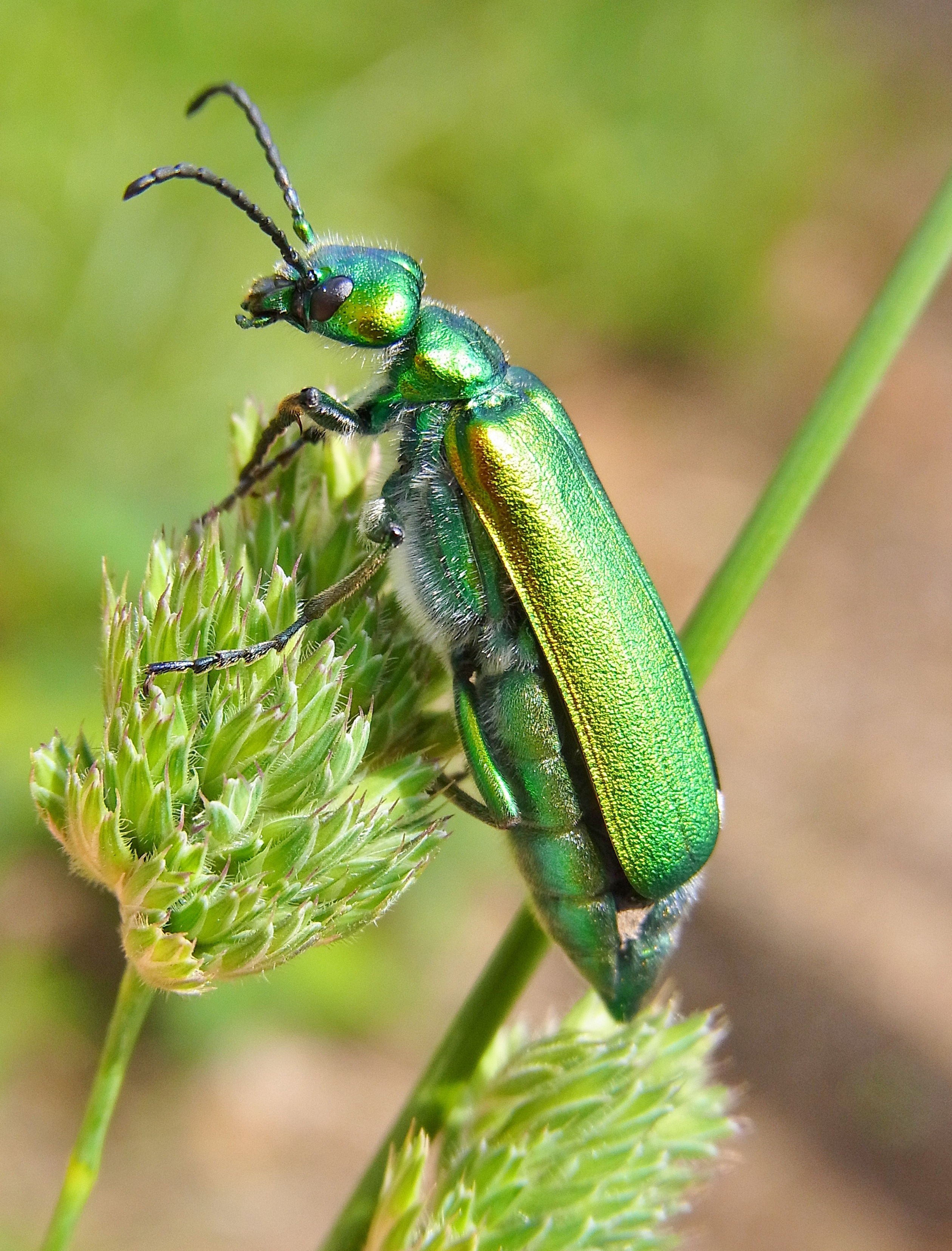
The Spanish fly is actually a blister beetle ( Lytta vesicatoria) whose noxious defensive chemical is toxic to people and bustards, but its toxin, cantharidin, in small amounts, is believed to be an aphrodisiac.
Blister beetles are famous for blasting attackers with cantharadin – a toxin strong enough to cause blisters on contact and to kill if ingested. Weirdly, blister beetles are believed to be aphrodisiacs, commonly known as “Spanish flies,” even though they obviously are not flies. The way it works is that a sub-lethal dose of cantharadin induces vascular inflammation of the genitourinary tract in men and women – it’s hard to imagine inflamed penises and vaginas as romantic.
So all this got me to thinking. In October, Carolina Bravo and colleagues published in PloS One, a leading scientific journal, a study suggesting that great bustards eat just enough blister beetles to ward off gut infections and parasitic worms. They also noticed that males eat more blister beetles than females and that females check out the anus of males during courting, which is where you’d look (if you were a female bustard or, in this case, a scientist) to see if there were worms or any signs of a poorly functioning gut. The authors suggest, though they really didn’t prove it, that male bustards eat extra blister beetles to self-medicate and show their healthiness so when a female comes to check their anus out – bingo!
So here’s my completely unsubstantiated scientific hypothesis – maybe the houbara bustard, like the great bustard, also eats blister beetles and that’s why it supposedly has aphrodisiac-like properties. It’s much safer to eat a bustard that ate blister beetles than it is to eat blister beetles. And while inflammatory irritation of the penis and vagina is not exactly romantic, death certainly wrecks a romantic evening.
The Prince, however, most likely claims that they are not aphrodisiac seekers. Rather, they are falconers like their nomadic ancestors, the Bedu, who would capture falcons, hunt bustards to supplement their meager diets, and then release the falcons and move on.
Now we can answer Sadiq’s question.
Yes, killing bustards to allegedly keep a tradition alive is more ridiculous. According to one account, the Prince and entourage fly in on private jets, have roads and luxurious accommodations built, bribe government officials to kill vastly more birds than they are permitted, enjoy lavish meals, satellite telephones and wi-fi, and drive luxury SUVs. This is not keeping the Bedu tradition of falconry alive. It is simply indulgent, repugnant “sport”.
That’s not to say that killing bustards for their aphrodisiacal properties isn’t ridiculous. It’s just a tiny bit less ridiculous.
 shahidnaeemblog