biodiversity, conservation, environment

Notes from an Increasingly Lonely Planet* 1: Bioslaves and the Human Convertitron

Masters of the Biosphere

We humans are incredibly fortunate here on earth because each of us has about 19,290 bioslaves in human-equivalent terms, to take care of us.

One might ask what a bioslave in human equivalents is – it sounds cool, though maybe creepy.  In the modern world, to be a slave master is an ugly, horrible thing.  But maybe being a master of bioslaves is different?

So let’s start by taking a closer look at bioslaves.

Bioslaves

One of the most important, fun, and possibly incredibly deeply disturbing ways of understanding humanity is to understand the unavoidable fact that we are Masters of the Biosphere.

Protest all you want, and champion the bacteria or lions or something else you think are the true Masters of the Biosphere, but there is simply no getting around the fact that, for better or worse, we totally dominate the Biosphere.  Sorry, but we 7.2 billion people rule – we command most of Earth’s freshwater, have converted almost all of the most productive lands to agricultural systems, have move more earth than Earth itself, and have radically altered Earth’s atmosphere, biosphere, lithosphere and hydrosphere – a lot of spheres, and no other species can make such a claim.

If we are masters, than all other species are slaves – bioslaves, to be precise.

You could think of non-human species as our friends, family, or fellow citizens of the Biosphere rather than our slaves, but that’s not popular thinking.  Most people think of plants, non-human animals, and microorganisms as soulless creatures here to serve us.  Indeed, the most popular environmental trend right now is to think that all non-human life is here to do one thing and one thing only – to serve us.  Modern environmentalism is mostly about ecosystem services – saving nature because it serves us.  But let’s not get caught up in that debate.
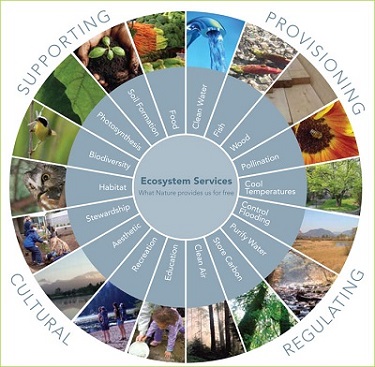
The dominant theme in modern environmentalism is the idea of ecosystem services - nature's value is in its service to us and not much else matters.

The dominant theme in modern environmentalism is the idea of ecosystem services – nature’s value is in its service to us and not much else matters.

What is lost by this view is that we don’t get through life on our own – our air is manufactured by plants, animals and microorganisms that also purify our water, produce our fruits, nuts, mushrooms, lumber, fiber, feed for our domestic animals, and medicines.  They regulate our climate, curtail the spread of disease, pollinate where pollination is necessary, and do a million, million things we totally love having done for us.

Picture yourself in brilliant white linen clothes, recumbent on a splendid chaise lounge, sipping bourbon (with an ice ball) on the veranda of an enormous mansion, many times bigger than you could possibly need, and you’re surrounded by creatures that do everything for you.  Then, consider the extraordinary thing that you don’t pay them anything for it.   And if you don’t like them, you can burn, poison, incarcerate, sell, or kill them.  Really, you are the master and they the slaves.  Thinking like the slaveholders and traders of yore, we just have to claim that plants, animals and microorganisms have no souls and according to convenient interpretations of otherwise inscrutable biblical texts, they are here to serve us by God’s will.

I know, I know, that’s a horrible way to think of the living world, but just for the moment, imagine it’s the God’s truth.  We can buy, trade, torture, murder, or drive to extinction any species and do whatever we want so that we can have rich and fulfilling lives.  OK – maybe so only 1% can have rich and fulfilling lives, but that’s another subject.

Now that we have a sense of what a bioslave is, we have to convert them into human slaves to get a better grip on what all this means.

Bioslaves and the Human Convertitron

The question that immediately comes to mind is – how many slaves do we each have in terms we can understand?

Scientists do this weird thing called back-of-the-envelope-calculations (BOTEC)) to quickly gain insights into things that are very difficult to fathom.  Here’s my BOTEC:

  1. We currently are 7.2 billion people each weighing, on average, 40 kilograms (remember that a kilo is about 2 pounds). Some are babies and weigh only a little while some are very, very heavy, so, I’m saying your average human weighs about 40 kilos.
  2. Take an average human – spleen, blood, liver, skin, bones, brain, fat, and put it all in a blender – whrrrrrrrrrrr!
  3. Extract the carbon – the key element to organic life. Humans are about 18% carbon.  So, the yield would be 7.2 kilograms of carbon per average human.
  4. So now, in our BOTEC, we have to imagine this machine called the Human Convertitron. It’s like the Matter Replicator in the Star Trek science fiction TV shows where as a member of the Federation we can type g-l-a-s-s-o-f-w-i-n-e-a-n-d-p-l-a-t-e-o-f-c-h-e-e-s-e into the console of a Matter Replicator and, after a very brief time, wine and cheese, complete with glass and plate, appear.  Presumably it took other matter and converted it into what we wanted.  The Human Convertitron is even simpler – it converts all matter into humans.  It’s basically the technological equivalent of a pronatalist  agenda – but that too, is another subject.
  5. Now take all the bustards, hawks, hummingbirds, pigeons, sea gulls, sparrows, otters, clouded leopards, elephants, mushrooms, bacteria in all the soils, sediments, and microbiomes of all creatures on earth, and all the redwoods, orchids, oaks, grasses, legumes, daisies, lianas, ferns, palms, lichens, dung beetles, dragonflies, aphids, butterflies, tuna, shark, crabs, lobsters, shrimp, snails, limpets, clams, oysters, mussels, chaetognaths, priapulids, corals, worms, and so on, and put it all in a blender – whirrrrrrrrrrrr!
  6. Feed this biosphere blend into the Human Convertitron and out pops, if I did my math right, 140 trillion humans! (My logic:  there are a trillion metric tons of carbon in the biosphere which, if you divide by 7.2 kilos per person, gets you 140 trillion humans).
  7. One more bit of simple math – take the 140 trillion human slaves and divide them by 7.2 billion and that means we each have about 19,290 slaves each.
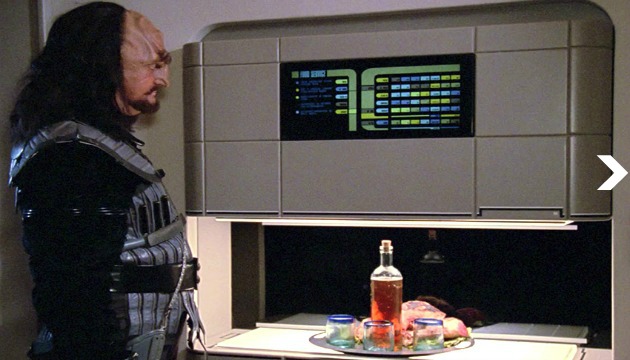
The Matter Replicator in Star Trek science fiction converts matter into whatever you want.  The Human Convertitron is the same hypothetical machine, only it converts matter into humans.

The Matter Replicator in Star Trek science fiction converts matter into whatever you want. The Human Convertitron is the same hypothetical machine, only it converts matter into humans.

It might be mildly disquieting to consider that we each have 19,290 slaves working for us.  Imagine waking in the middle of the night and discovering 19,290 slaves standing in the dark, packed into your room, spilling out into the streets, all waiting to serve you.

On the other hand, it’s a stunning thing to consider the extraordinary magnitude to which we are served by nature when we convert biodiversity to humans.

What nature does for us is equivalent to having 19,290 human slaves working for us 24/7 without any compensation, rights, or protection of their well-being.

It’s a good thing we don’t have a Human Convertitron because if we did and if we converted all life to humans, Earth would collapse almost instantly unless the 140 trillion humans knew how to make our environment habitable so that we and the other 7.2 billion (or that portion of legal age) can sip bourbon (with ice balls).

On the other hand, maybe if we saw ourselves as part of the community of life on Earth, rather than Masters of the Biosphere, things might play out differently.  Slavery is one of the darkest sides of human nature and while we may not see its ugliness in the concept of bioslaves, when we recast our biota into the equivalent of human slaves, an exercise meant to see nature differently, we discover how deeply disturbing it is to consider life on Earth our slave.  Perhaps if we had considered ourselves working in league with species, rather being masters of the Biosphere, we would view life on Earth in a way that would promote environmental sustainability and human wellbeing.

————————————————————————————————————————–

*Over the years, in foolish anticipation of one day writing a book entitled, Notes from an Increasingly Lonely Planet, I started collecting thoughts about the demise of our world that might convey ecology and evolution in unconventional, perhaps more interesting and even entertaining ways.  I worried that the bulk of environmental literature, especially books, prophesized doom, were alarmist, chastised their readers or humanity in general, or were otherwise off-putting.  I understand where environmental writers are coming from, but I wanted to take a different approach, even if the message might have unavoidably somber overtones.  These notes, however, just don’t come together well as a book, so I hope they might work as blogs.

This is my first installment of Notes in my year of practice blogging.

Standard
climate change, environment

If the Earth were flat, Iggy and Jim could go to Tokyo on the Nebuchadnezzar

I was listening to Iggy Azalea’s song, “I’m so Fancy,” and I decided to join the Flat Earth Society.

By admitting this I will probably get into some sort of trouble.  Scientists, such as myself, are thought to be classical music buffs, and if it were to emerge that some of us listen to pop or hip hop, our reputations would take a hit.

I suppose joining the Flat Earth Society could also get me into trouble, but I had to join.  I wanted to tackle a serious problem, one that we all know but live in denial of, one that is global in scale, and one that affects all of us – the staggering sphericity of Earth.

The roundness of the Earth is massively annoying and there seems no way around it.  But then I discovered the power of denial.  As a scientist, of course, I was skeptical about denialists’ claims, but when Senator James Inhofe nearly crashed his 1978 twin-engine Cessna into a construction crew on a closed runway in Port Isabel-Cameron County Airport in Texas, it all came clear to me.

Many chalked up Inhofe’s near fatal maneuver to his hubris.  The airport manager, Marshall Reece, said “I’ve got over 50 years flying, three tours of Vietnam, and I can assure you I have never seen such a reckless disregard for human life in my life. Something needs to be done. This guy is famous for these violations.”

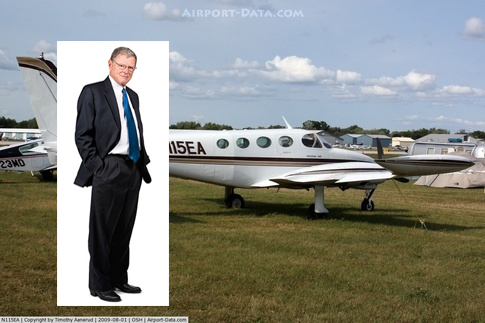
James Inhofe recklessly endangering human life with his twin-engine Cessna   (background).

James Inhofe recklessly endangering human life with his twin-engine Cessna (background).

It’s not Inhofe’s hubris, however, that is the problem- it’s his denial of science.  The fault lies in the fact that his Cessna is designed and flies according to the laws of physics and is navigated on the principle that the Earth is round.  Inhofe’s reckless endangerment of human life is most likely because he is a science denier flying a plane that requires understanding science to fly it safely.  It would only be safe if he were flying something like the Nebuchadnezzar hovercraft from the sci-fi movie, The Matrix, a plane based entirely on fantasy and something he can better understand than physics.  He could fly the Millennium Falcon, Starship Enterprise or the Good Ship Lollipop, but I’m guessing the Nebuchadnezzar’s navigation is based on flat-earth theory, so it seems the appropriate choice.  I’ll explain below.

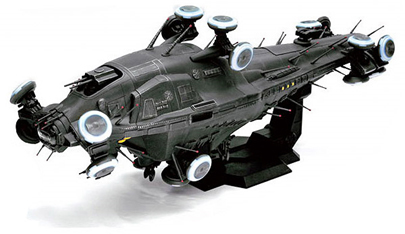
The Nebuchadnezzar form the "The Matrix."  It probably has a flat-earth navigation system.

The Nebuchadnezzar form the “The Matrix.” It probably has a flat-earth navigation system.

The inconvenience of Earth’s sphericity

Perhaps the only thing more scientifically proven than climate change is the fact that the Earth is round.  Earth’s roundness, however, like climate change, is really inconvenient, and while I understand that over 97% of scientists believe it’s round, it’s just not an idea consistent with what I want to believe.  There are many reasons that our planet’s being round is inconvenient, but two are really striking.  First, there are no straight lines on a sphere, which makes navigating Earth really difficult.  I can’t just get out a flat map and draw a line from L.A. to Tokyo and then take off in that direction – I would never get there.  If I stubbornly keep my nose pointed in one direction, because the Earth is round, I will stray from the circle that actually connects L.A. and Tokyo and instead spiral to the pole and my doom.  To actually reach Tokyo, you need a good clock, a compass, and you need to do lots of trigonometry to calculate how to compensate for the roundness of the world.  Let’s be honest, who among us does not find sines, cosines, and tangents (and don’t even get me started on secants) to be wretched things – SOHCAHTOA still gives me the willies.

Second, once you are only about 30 miles (18.6 km) on one’s way, the sphericity of the Earth means that things will disappear behind you – and that’s just plain spooky.  Sphericity is why Sarah Palin can’t see Moscow from Wasilla, why we can’t see Tokyo from L.A., and why shopping carts disappear over the horizon in Walmart Supercenters.

Let’s face it; the roundness of the world is a serious problem and no one is doing anything about it.

How to flatten the Earth

Turns out that the Flat Earth Society is doing something about the tyranny of sphericity.  Boasting over 500 members, the Society maintains a great web site along with a wiki, downloadable documents, member registry, and much more.

The Flat Earth Society has a nice map where the Earth is shown to be a disk with the Arctic in the center and as you go out to the ends of the Earth, you encounter a wall of ice.  Try it – walk in any direction from the North Pole and you indeed hit a wall of ice (though a lot of it is melting).  This wall of ice, mistakenly considered by sphereists to be another continent they call “Antarctica,” is kind of like the Wall in Game of Thrones, where the soldiers of the Night’s Watch guard the north of the Seven Kingdoms against the Others.  But Game of Thrones is fantasy, where flying is principally done by dragons and three-eyed crows.

The Antarctic is not a  continent, but a wall of ice and rock marking the ends of the Earth.

The Antarctic is not a continent, but a wall of ice and rock marking the ends of the Earth.  (Map available from the Flat Earth Society’s web resources.)

Conventional physics, trigonometry, and known travel distances on Earth seem to make the Earth being flat unlikely.  Flat-earth theory, however, is well grounded in biblical support and based on many other arguments, as explained nicely on the Society’s web site.  They point out, for example, that King Nebuchadnezzar’s dream was given to him by God, and in that dream he was shown a tree that touched the heavens and could be seen from every corner of the Earth before it was destroyed.

Earth must be flat if Nebuchadnezzar’s tree could be seen from everywhere.  For this reason, I presume the navigation system of the Nebuchadnezzar hovercraft is founded on flat-Earth principles.

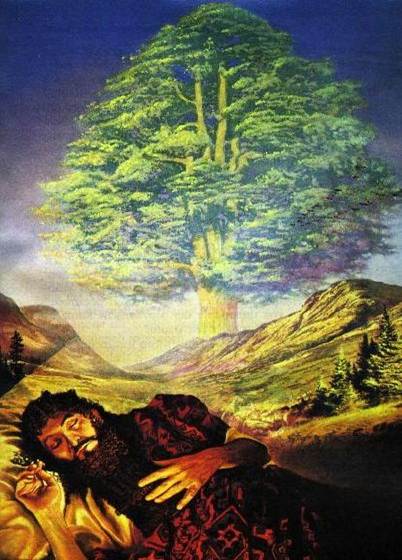
King Nebuchadnezzar  dreamt of a tree that reached the heavens and could be seen from everywhere on Earth - support for flat-Earth theory.

King Nebuchadnezzar dreamt of a tree that reached the heavens and could be seen from everywhere on Earth – support for flat-Earth theory.

Faith in flatness

Ignoring science like climate change means reckless disregard for human life, but politicians avoid criminal charges by designing legislation to support their denial.  Inhofe, for example, had to undergo a program of remedial training as penalty for his reckless flying, so he introduced the Pilot’s Bill of Rights (Public Law 112-153) to protect pilots from what he deemed government overreach.  Similarly, 24 Republican Energy and Commerce committee members voted against the amendment to the Electricity Security and Affordability Act, denying climate change.  The benefits of such personal convictions produced over $9.3 million dollars in industry contributions to climate deniers on the committee and it also hobbled further “government overreach” (i.e., the Environmental Protection Agency regulating carbon dioxide emissions by power plants).

It seems one can use the political capital of the tremendous public admiration for adherence to personal beliefs and faith to counter the minor hit one takes from public disdain for ignorance.  So, in this spirit, I decided the Earth was flat.

All I have to say is:

“I’m no Earth scientist, but if you ask me, it’s flat.  I mean, just look at any map – they are all flat.  I’m not going to stand by and allow the American People to have to put up with things disappearing over the horizon and having to know trigonometry.  It’s a personal opinion, not a scientific fact.”

Championing my faith over science should earn me public admiration, maybe even enough to counter my likely reputational hit I take for listening to Iggy Azalea.

Iggy Azalea; physicist and flat earther?

Returning to Iggy’s song which started this whole thing—though she’s not on the Flat Earth Society’s roster, I get the distinct feeling from her song that she’s a sphericity denier.  I really like her catchy tune, but the refrain “I’m in the fast lane, from L.A. to Tokyo,” is what clued me into her subscribing to flat Earth theory.  The refrain refers to her huge fan base, but what’s puzzling is that there’s only ocean between L.A. and Tokyo.  Not a lot of music fans along this route, which is why I suppose it is critical for her to take the fast lane.  So what she must mean is that her popularity is global, covering the whole world from one end (L.A.) to the other (Tokyo).  A round Earth, however, has no ends, so if you simply mean from one point to the polar opposite, the polar opposite of L.A. is actually someplace between Madagascar and Australia, not Tokyo.  So she must think the world is flat, with the most distant points being between L.A. and Tokyo, and since travel between the two involves going over the Pacific, you want to be in the fast lane.

Iggy and Jim go to Tokyo

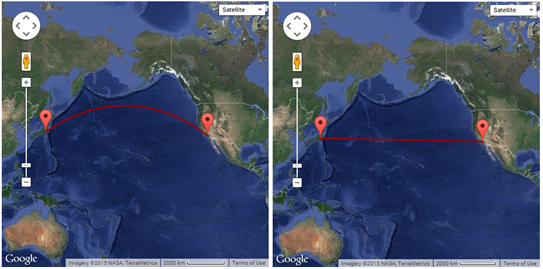
So if Iggy Azalea is a sphericity denier, it means she must have to deal with figuring out where the “fast lane” between L.A. and Tokyo is.  If you believe the Earth is flat you, then the fast lane is the straight line connecting L.A. and Tokyo on a flat map, or at least that would be the shortest path and hence the fastest “lane”.  This straight-line path, however, is 5,786 miles (9,312 km) long, while the shortest path between L.A. and Tokyo is actually much shorter – 309 miles (497.3 km) shorter.  If you plot this genuine “fast lane” on a flat map, it’s an arc skirting south of the Aleutians and, according to the scale on the map, appears longer than the straight-line connection.

The tyranny of sphericity means that one cannot simply go from L.A. to Tokyo  following a straight-line path (right).  You have to go in an arch (left).  Annoyingly, the right line is 309 miles longer, even though it looks shorter.

The tyranny of sphericity means that one cannot simply go from L.A. to Tokyo following a straight-line path (right). You have to go in an arch (left). Annoyingly, the straight-line path is 309 miles longer, even though it looks shorter.

So I was thinking, though it might seem strange, that if Inhofe decided to give Iggy Azalea and her entourage a ride in his Cessna from L. A. to Tokyo in the fast lane, I’m guessing, at a maximum speed of 174 mph (280 km/h) and a range of about 1,600 miles (2,600 km), by denying that the Earth is round, he would need not only extra fuel for the extra 309 miles but around two hours of extra stuff to talk about, which would most likely be Iggy Azalea’s physics lessons (“And I’m still in the Murda Bizness; I could hold you down, like I’m givin’ lessons in physics”).  He’d have to make stopovers in the Pacific, though given places like Kiribati are sinking due to climate change, his options are limited.  More than likely, he would recklessly endanger Iggy Azalea and her entourage, although if they also happen to be climate deniers, then they would not fault him.  For this reason, they take the Nebuchadnezzar hovercraft instead of the Cessna

OK, a wildly implausible scenario, Inhofe taking Iggy Azalea and her entourage in the fast lane from L. A. to Tokyo aboard the Nebuchadnezzar, in exchange for physics lessons, navigating by the flat earth map downloaded from the Flat Earth Society’s website.

But compared to what’s going on in Congress concerning climate change, my scenario is far more believable.

——————————————————————-

Postscript

Sadly, though I joined the Flat Earth Society, I discovered today that the Earth is still round.

As Jean Baudrillard, the French philosopher said, “Reality is a bitch.”

Standard
environment

The “Yo momma” Solution

Seeing the crazy way that everything is connected to everything else is one of the best ways to find solutions to environmental problems.  Consider, for example, the connections between the financial crash of 2008, Morgan Stanley (the mega finance corporation that borrowed $107.3 billion from us), “yo momma” jokes, and extraterrestrials – when you put it all together, it points to a possible cause and a solution to global environmental problems like mass extinction, habitat fragmentation, deforestation, and emerging diseases.  I have to admit the chain of logic in this thesis of connections is a bit iffy, but I can explain.  Let’s start at the beginning of the chain.

The Financial Crash of 2008

The boom times running up to the 2008 crash were, in part, attributable to a huge financial house of cards built on a foundation of bad loans.  These loans were mortgages on overpriced homes purchased by people who couldn’t afford them.  I’m simplifying; it’s a complicated story, and I’m no economist, so I’ll leave the full story for others (like Paul Krugman or Daniel Quinn Mills) to tell, but for our purposes here, suffice it to say these “sub-prime” mortgages were purchased by financial institutions that were locked into a complex scheme of largely unregulated risky monetary practices that totaled in the trillions.  When the scheme collapsed Lehman Brothers tumbled, and Morgan Stanley followed quickly along with other major finance institutions like Merrill Lynch, AIG, Freddie Mac, Fannie Mae, Bear Sterns, Goldman Sachs, and many others; all once deemed so powerful and secure they could never fail.

Morgan Stanley

Morgan Stanley fell in part because its hedge fund operations were financed by the purchase of those risky mortgages.  What struck me as ridiculous was Morgan Stanley’s claim that it was a victim like everyone else, not one of the perpetrators.  It claims it never knew the true nature of the risks it was taking.

Morgan Stanley

Seriously?

So when I read Nathaniel Popper’s article in The New York Times (December 29, 2014) that investigations reveal that Morgan Stanley did, indeed, know the risks and, in fact, was instrumental in the growth of bad mortgages, I wasn’t surprised.

What caught my eye, however, was a quote from Morgan Stanley executive Pamela Barrow’s e-mail to her colleague.  Ms. Barrow called the people who bought the houses (with a few added punctuations of mine), “first-payment defaulting, straw buyin’, house-swappin’, first-time wanna-be home buyers.”

Oh snap!

Though not exactly the kind of sharp-tongued repartee of a Comedy Central celebrity roast or the clever verbal sparring of kids ranking or playing the dozens (insult contests) in my school days, Ms. Barrow shows some skill.

But where it really gets interesting is when she continued with a solution that could have saved Morgan Stanley and prevented the 2008 crash if it were implemented.  She said,

“We should call all their mommas.  Betcha that would get some of them good old boys to pay that house bill.”

That’s when it hit me and I had my “aha!” moment.

Yo-momma jokes

Where I grew up in Bedford Stuyvesant, mommas, in the abstract, were serious business – one did not talk about another’s momma unless it was to agitate.  Because of this, “yo momma” jokes were common in ranking or the dozens – the jokes were not actually about mothers, they were just insults meant to test one’s resolve.

Consider, for example, “Yo’ momma’s so ugly, when she threw a boomerang, it didn’t come back!” or

“Yo momma’s house is so small, there isn’t room to change her mind,” or

“Yo momma’s so poor, she does her drive-by shootings by bus,” or

“Yo momma’s so dumb, she stood on a chair to raise her IQ.”

In a moment of honest reflection, when Ms. Barrow considered the risk inherent in Morgan Stanley’s growing acquisitions of sub-prime mortgages to fuel their hedge funds, she must have entertained inserting the clause in the loan agreements that read, “Upon failure to make payments, we’re calling yo’ momma, who, incidentally, is so stupid she thinks a sub-prime is a steak.”

Her solution of threatening homeowners with the possibility of having their mommas drawn into the matter and possibly having to defend their mommas (a cultural obligation rather than a rule of law) if they defaulted on their loans was brilliant.

Extraterrestrials

So here’s my thesis – it is common to consider Earth our mother, and, indeed, the mother of all life on Earth, so Barrow’s momma-based strategy could work, except for one complication – when ranking or playing the dozens, one’s opponent has to be someone outside your family, your friends, or your posse.  When it comes to Earth, who is momma to us all, the yo-momma joke has to be leveled by someone from another planet (their momma being their planet).

A somewhat creepy view of mother Earth, but it works. (Image from http://planetoplano.blogspot.com/).

So, if the SETI Institute, those folks searching for signs of extraterrestrial intelligence, were to one day receive a staticky, crackling set of communications that that splashed across the news media around the world, and roughly translated as:

“Yo planet is so depauperate, it makes the Tabernacle Choir look speciose!” or

“Yo planet is so fragmented, it makes Humpty Dumpty look good!” or

“Yo planet’s got so many emerging diseases, it makes a zombie apocalypse feel like a Club Med vacation!” or

“Yo planet’s climate is changing so fast, it makes a Kardashian romance look like a long-term relationship!” or

“Yo planet’s so deforested, a Brazillian wax leaves more bush!”,

people would be outraged.  Well, yes, and a bit surprised about the nature of our first contact.  After getting over the shock of discovering we are not alone, however, we would be motivated to respond,  “Oh yeah?  Well yo planet is so f#@!ed up, even James Inhofe thinks your climate is changing!”

OK, since waiting for extraterrestrials to taunt us is a bit farfetched, I do hope the chain of logic behind the idea is at least clear.

One might say that Earth as mom is already a well-known environmental trope, but it doesn’t resonate with everyone.  But maybe yo-momma jokes about our Earth, our mom and mom to all species and mom to our vibrant, living world, might just get even the most apathetic exorcised enough to defend our momma and her honor.

Standard
biodiversity, environment

Home is where you hang your children’s children’s ….hat: Life at the bottom of the sea and elsewhere.

In 2006, a few years after we arrived in Manhattan and were still reeling from big city rents, The New York Times reported that a certain Mr. Freeman, mostly out of curiosity, posted an ad for renting a hole in a wall in his apartment – $35.00 a month.  He had a dozen inquiries by day’s end.  Home is, after all, where you hang your hat.

In the case of life on earth, home is where eventually at least one of your children can hang her hat, which means, by extension, it is where at least one of your children’s children can hang their hat, and so on.  It hardly matters if it’s a hole in the wall or a luxury condo, though we’d all prefer the latter, no doubt.

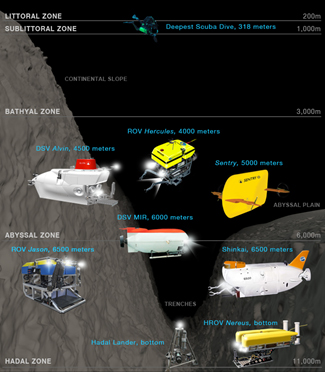
When it comes to hole-in-the-wall homes, the ocean’s hadal zone probably tops the charts as the worst place to live.  The hadal zone is anyplace between 4 to 7 miles below the ocean’s surface.  That’s roughly 6 to 11 kilometers down – deeper, as marine biologists love to point out, than Mt. Everest is high.

Deep though the hadal zone may be, it’s a tiny place; only a couple percent of the entire ocean floor that totals over 100 million square miles (multiply by 3 for kilometers).  It’s a tiny area because most of the zone is made up of deep cavernous drops or oceanic trenches and while there are plenty of oceanic trenches, they don’t cover much area.

If your home is in a hole at the very bottom of the sea, you’re living in the hadal zone.

Freeman’s hole in the wall is a luxury condo compared to hadal holes at the bottom of the sea.  The hadal zone doesn’t look so bad when we are treated to pictures and videos of the place, but these images are taken with custom-made cameras mounted on ruggedly engineered diving robots or by people in deep-sea submersibles that have lots of lamps for taking those images.

Deep sea submersibles - letting us see a word that is largely pitch black.

Deep sea submersibles – letting us see a word that is largely pitch black.  From the HADES web site – note the hadal zone at the very bottom.

In reality, sunlight only penetrates down, at best, to maybe 660 feet (200 meters).   Thus, the hadal zone is even darker than the underworld for which it is named because there is absolutely no light down there, except for the occasional flicker of bioluminescence.

It’s not just a pitch black world, it’s a creepy world – a place under a perennial drizzle of detritus, dead microbes, and particulate poop from the creatures above.  Occasionally, a corpse might make it to the bottom if scavengers above missed it as it sank slowly through miles of ocean and into a trench, but that won’t happen often.  It’s also near freezing and the pressure down there is a thousand times what it is up on the Earth’s surface.

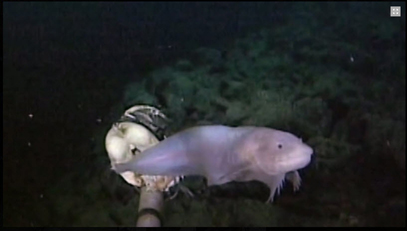
The hadal zone hardly seems a neighborhood where anything would want to live.  And yet, scientists from the Hadal Ecosystem Studies program, or HADES, recently broke the record for the deepest fish ever found.  So, in spite of what must be the most extreme conditions on Earth, there are creatures that call it home.

But when you think about it, though the hadal zone is pretty extreme, the truth is, much of the world is inhospitable – too hot or cold, too dry or wet, and/or too little food or energy to go around.  Of the 330 million cubic miles (about 1,200 million cubic kilometers) of ocean water, only 14 cubic miles (or just 60 cubic kilometers) is in the sunlit or euphotic zone.  The euphotic zone is what we think of when we think of the ocean – kelp beds, coral reefs, eel-grass beds, or the surface waters where we see jellyfish, sun sharks, and sea turtles, but the vast majority of the ocean is a dark, cold place.  The same is true for terrestrial Earth – we tend to think of majestic forests filled with trees, flowering plants, buzzing insects, and a host of birds and mammals, or we might think of grasslands with elk and bison and wildflowers everywhere.  But vast regions of terrestrial Earth are dry (16%) or just rock and ice where little can live (25%).  It’s hard to say what percent of land is perfect for life, but if we were to consider that to be tropical habitats – that’s only about 24% of the terrestrial world.

Yet, no matter how inhospitable a place on Earth is, whether the dark hadal zone or the icy arctic, you will almost always find species that call it home.  They and their children and their children’s children, and so on, live there generation after generation.

When I think of our Biosphere, I think of New York City – home to millions.  It’s not the few who live in mansions, townhouses, luxury condos, or spacious, well-furnished, well-lit abodes that make NYC the vibrant city it is, though the wealthy often serve some important roles.  It’s the writers, musicians, artists, short-order cooks, police, firefighters, medics, teachers, scientists, architects, engineers, students, bus drivers, train conductors, garbage collectors, and the millions of people who live and work together that make the city work.  Their homes are modest places, though holes in the wall are probably rare.

The Biosphere is the same as vibrant mega-cities – all its inhabitants live and work in every space imaginable. The hadal zone is no luxury abode, but it’s home to hundreds of species, two thirds of them living nowhere else, and if we could figure out how to estimate how many archaeal and bacterial species live down there, the number would be much bigger.  It’s not just weird fish (including eels) down there, but amphipods, crabs, isopods, sea cucumbers, mollusks, lots of microorganisms, and probably many species waiting to be found.  The hadal zone may be ecological holes in the wall, but then most of Earth is a challenging place for life.  Yet, 8.7 million species call it home, and make for a rich and vibrant world.

Life values every place on Earth as home.  Strange that not all of us value Earth in the same way given that we too make our homes here.

Standard