
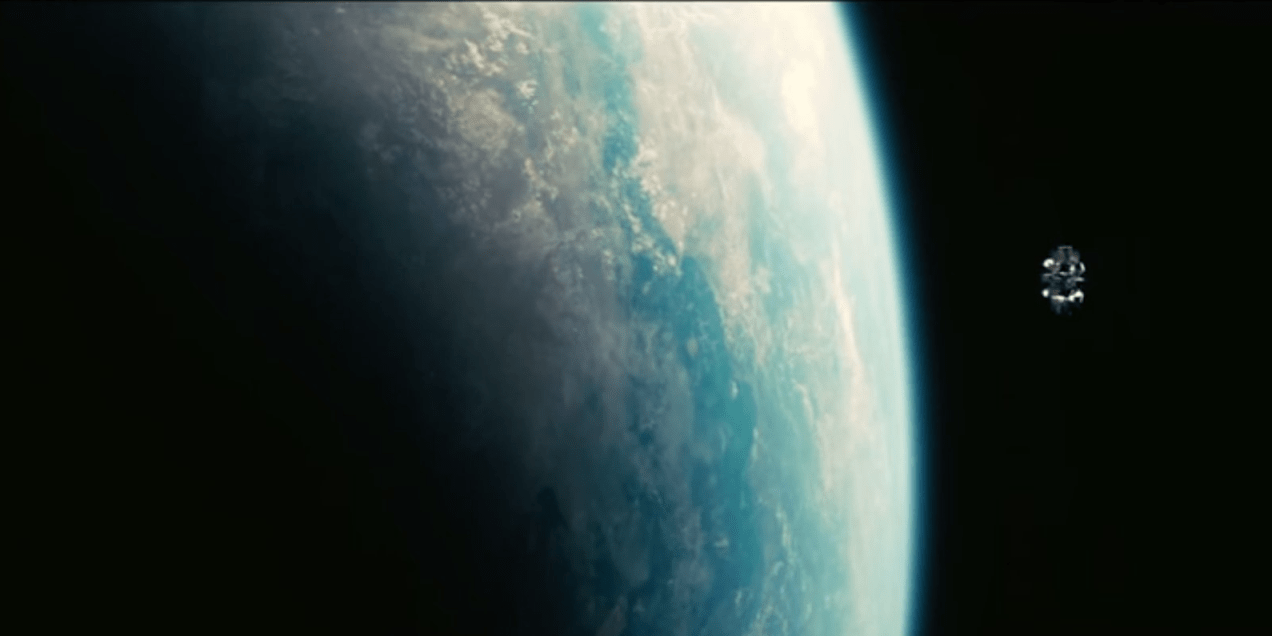
IMAX is expensive, but it’s great to see a movie on a giant screen with big sound, especially sci-fi movies like Interstellar, where space travel takes you across vast vistas of space and there are lots of ear-shattering sounds of space ships crashing and exploding. Interstellar champions itself as a novel sci-fi movie that will make you think about physics – time, gravity, multiple dimensions – it’s a very cosmic movie. Kip Thorne’s book, The Science of Interstellar, written in anticipation of the success of the movie, is supposed to help moviegoers whose interest in physics is piqued by the movie. Thorne has co-authored with Stephen Hawking about black holes and time warps and was a consultant for the movie.
Interstellar ’s physics may have been carefully constructed with the benefit of expert input, but its environmental “science” is just awful. This horrifically bad environmental science is odd because the whole premise of the movie is that Earth is dying, which is an environmental issue. While there are millions of ways one could imagine, scientifically, how our Earth might die, the Nolan brothers who wrote the movie (the brothers are known for their Batman movies and mind teasers like Inception and Memento), seemed to have consulted no one on getting the environmental science right.
The environmental science may lacking, but its environmental ideology is all too apparent and is passed off as science. The movie’s environmental ideology is what I often refer to as anthro-exceptionalism – the belief that we are an exceptional species. I blogged about this earlier when considering Intelligent Design and Creationism – the idea is that the purpose of 14 billion years of cosmic history was to produce us – sentient beings capable of understanding and therefore appreciating how wonderful the world is. The core ideas of anthro-exceptionalism are:
- the more babies, the better – it’s biological, it’s natural, it’s not subject to question;
- humanity’s prime directive is the prevention of its extinction – that’s what evolution is all about;
- the environment is out to get us – nature and the cosmos are bastards and set against us;
- physics and engineering are vastly more interesting than ecology and evolution – we can bend the laws of physics (as in Interstellar), but ecology and evolution simply catalog the unfortunate, dull, immutable facts about life; and
- no matter the global crises, we will find a way out – even though the root cause of modern global crises is usually us.
I don’t take issue with subscription to these beliefs; indeed many of my friends and colleagues subscribe to this ideology. What one has to watch out for, however, is when subscribers to anthro-exceptionalism mistake their beliefs for science or worse, allow their ideology to influence their research.
It’s hard to maintain the willing suspension of disbelief when the movie’s explanation for why the Earth is dying has to do with agricultural blight (caused by deadly pathogens of crops), dust bowls, and the loss of oxygen, all portrayed as if we lost our struggle against a cruel and indifferent world. It never occurs to the Nolan brothers that the problem lay in the fact that we allowed our population to reach extraordinary numbers that were wholly dependent on a handful of fragile and vulnerable crop species. It was a formula for disaster. That’s why the Earth was dying in Interstellar, not because nature had conspired against us.
In Intersteallar, halcyon times are portrayed as times when fields were green, we could play baseball and eat hotdogs rather than popcorn, and we had large families. But the dying Earth was due to that being our vision – the dying of Earth was our doing, not something inherently flawed in nature. The absurdity of Interstellar’s new world is that it seems to be exactly the same as the one that died – a world made up solely of monocultures, baseball, and large families.
While the environmental science is rubbish, Interstellar is still immensely entertaining and because its environmental ideology reflects popular beliefs, few are likely to be bugged by its nonsensical environmental science. The human drama (love between a father and daughter), imagined technology (cool robots and spaceships), suspense (will they survive?), and the astrophysics (space travel, exoplanets, worm holes, and the 5th dimension), are what draws the big crowds.
Still, what if Interstellar considered how amazing our Biosphere is and imagined its demise because of accidental mismanagement and mass extinction and then attractive, smart people scoured the universe for solutions, found them, and came home to rebuild. That would make for an incredible IMAX experience.
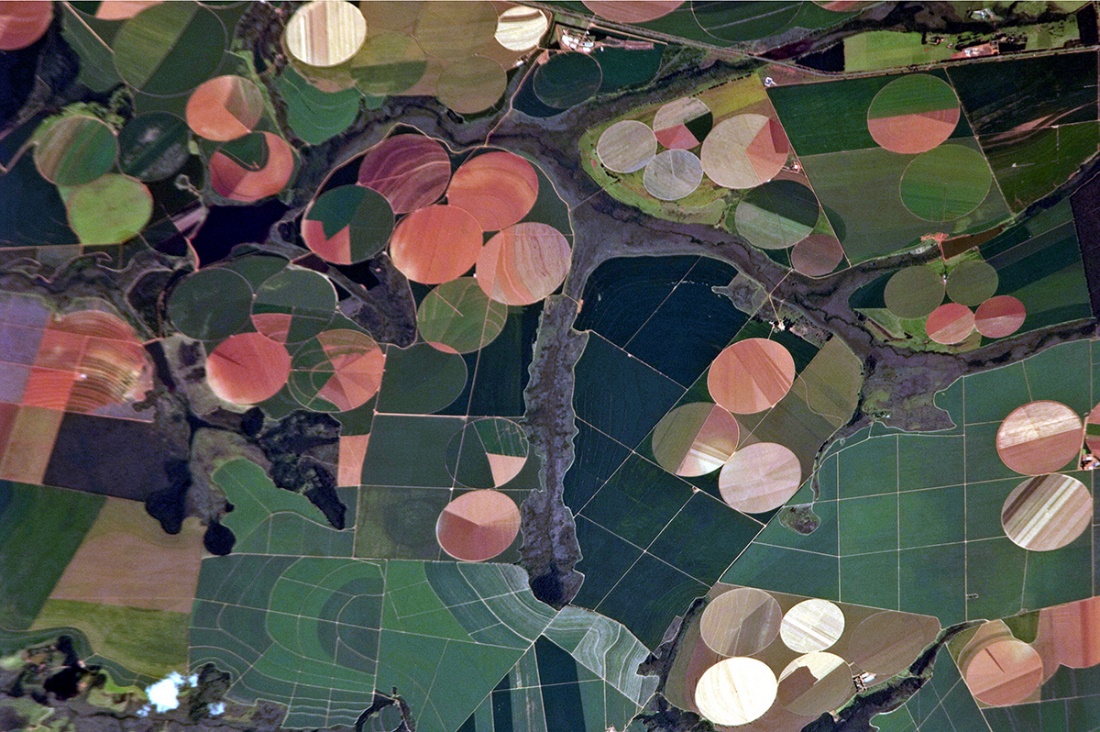
The environmental consequences of agriculture. In the movie, “Interstellar,” the physics may have been inventive, but it was carefully thought out. The environmental science, on the other hand, was poor. There are many reasons Earth may one day no longer sustain us – ironically, agriculture, our primary way of sustaining human growth, is one of them.
 shahidnaeemblog